Autism Isn’t One Story: What New Science Means for Your Child’s Diet & Development
Based on a landmark Nature study (2025) and emerging understanding of gut–brain development
Autism Develops Over Time — Not All at Once
Many parents ask a painful question:
“If autism was always there, why was my child diagnosed so late?”
A major new study published in Nature (2025) offers an important answer:
autism does not follow a single developmental path.
Researchers found that children diagnosed early and those diagnosed later often show different developmental trajectories, influenced by a mix of genetics, biology, environment, and daily exposures.
This matters deeply — because it tells us that what happens during childhood can influence how challenges emerge, intensify, or soften over time.

Two Common Developmental Patterns (Not “Types”)
The study highlights two commonly observed patterns:
⃣1. Children Diagnosed Early
- Social and communication differences appear early in life
- Challenges are easier to identify in toddler years
- Diagnosis often happens sooner
⃣2. Children Diagnosed Later
- Early childhood may appear “typical” or only mildly different
- Difficulties increase during school years or adolescence
- Often accompanied by digestive issues, attention challenges, anxiety, or emotional dysregulation
Importantly, researchers found that genetics alone explain only about 11% of why diagnosis happens early or late.
That means daily biological inputs matter.
Where Parents Have Real Influence: The Gut–Brain Axis
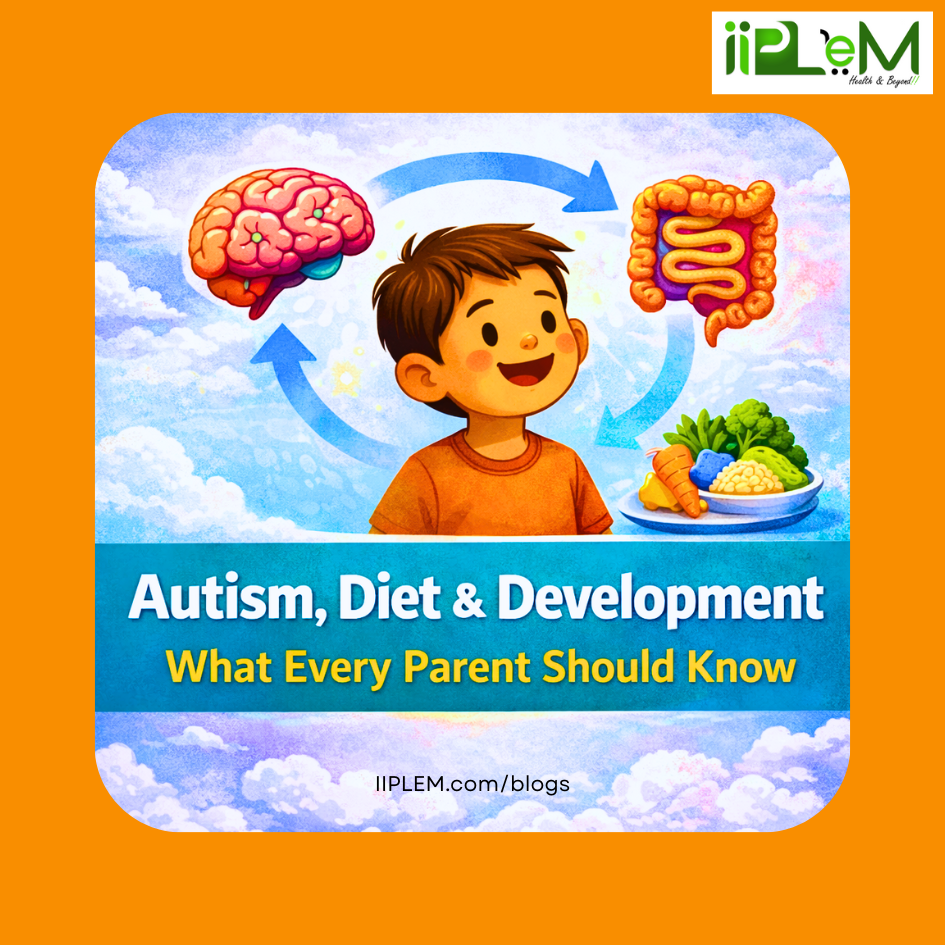
Modern neuroscience increasingly recognises the gut–brain axis — the two-way communication between digestion, immunity, metabolism, and the brain.
For many neurodivergent children:
- Gut inflammation
- Food sensitivities
- Immune activation
- Blood–brain barrier stress
can quietly influence behaviour, focus, sleep, and emotional regulation.
This does not mean food “causes” autism.
But it does mean that food can modulate how challenges express themselves over time.
And that’s where diet becomes a support tool, not a cure.
Why Gluten & Casein Matter for Some Children
Gluten (from wheat) and casein (from dairy) are known to:
- Be difficult to digest for many sensitive children
- Produce bioactive peptides in some individuals
- Trigger low-grade gut inflammation
- Worsen gastrointestinal discomfort
In children already navigating neurodevelopmental vulnerability, this can:
- Increase irritability
- Affect sleep quality
- Reduce attention and learning readiness
- Amplify behavioural fluctuations
This is why many clinicians and parents worldwide explore GFCFSF diets:
Gluten-Free, Casein-Free, Soy-Free
Not as a treatment — but as biological load reduction.
What the Nature Study Subtly Reinforces
The study shows that:
- Later-diagnosed children often have overlapping traits like ADHD, anxiety, and stress sensitivity
- These traits emerge and intensify over time, not overnight
- Development is shaped by continuous exposures, not just genes
Diet is one of the most frequent, repetitive exposures a child experiences every single day.
If something is consumed:
- 2–4 times daily
- for years
- during brain development
it deserves attention.
A Gentle, Science-Aligned Starting Point for Parents
At IIPLeM, we encourage parents to think of nutrition as:
“Daily biological information for a developing brain.”
A GFCFSF-aligned diet can:
- Reduce digestive burden
- Lower inflammatory triggers
- Support gut comfort
- Create a calmer physiological baseline
This baseline is essential for:
- Therapy responsiveness
- Learning readiness
- Emotional regulation
- Long-term developmental support
Why SPORTIFY Plant-based Gluten-free Multigrain Flour Variants Were Created
Parents often tell us:
“My child is picky.”
“Gluten-free foods don’t suit our meals.”
“I don’t want dramatic changes.”
That’s why we designed: SPORTIFY GFCFSF foods
They are:
- Gluten-free, casein-free, soy-free
- Gut-friendly and low-inflammatory
- Designed to blend quietly into everyday Indian meals
- Focused on nourishment, not restriction
Because consistency matters more than perfection.
An Important Reminder
This science does not say:
❌ Diet cures autism
❌ Every child must follow the same plan
It does say:
✅ Autism develops along multiple pathways
✅ Biology and environment interact over time
✅ Parents can reduce avoidable biological stressors
Final Thought for Parents
If autism is a journey, then food is the road your child walks on every day.
You may not control genetics.
You may not control diagnosis timing.
But you can choose:
- Gentler inputs
- Better digestion
- Lower inflammatory load
And sometimes, that’s where meaningful change begins.
Explore GFCFSF-Aligned Nutrition
👉 Visit IIPLeM.com
👉 Discover SPORTIFY Gut-Friendly Foods
👉 Start with special gluten-free flours - Sportify Begins™ & Hi-Protein & NutriNinja™ — small change, daily impact
Share your perspective in the comments below. Let’s build a more transparent, empathetic community — one conversation at a time.
About the Author
Ft. Arnab Guha is a food scientist, inventor, and deeply hands-on D2C FMCG entrepreneur with 19+ years of experience across food, agriculture, and biotech—spanning corporate R&D as well as manufacturing roles at Heinz, Britannia, and Novozymes to a decade-long, fully bootstrapped founder journey. An M.Sc. in Food Science & Technology from CCS HAU-Hisar and a named inventor on 6 patents, Arnab founded Impeccable Innovations Pvt Ltd (IIPL) in 2016 to build science-backed, gut-friendly innovative healthy & non-inflammatory food company. In his entrepreneurship journey, he has also founded an ethical health-first marketplace (IIPLeM.com & a NGO named - 2nd Brain Foundation). Having navigated low-AOV D2C economics in disease & disorder segments, trust deficits, and human behavior without investor capital or discount-driven growth, his insights are shaped not by theory—but by years of execution, restraint, and resilience in one of the toughest consumer categories.
SUBSCRIBE TO OUR YOUTUBE CHANNEL FOR LATEST VIDEOS ON AUTISM AND EARLY INTERVENTIONS