

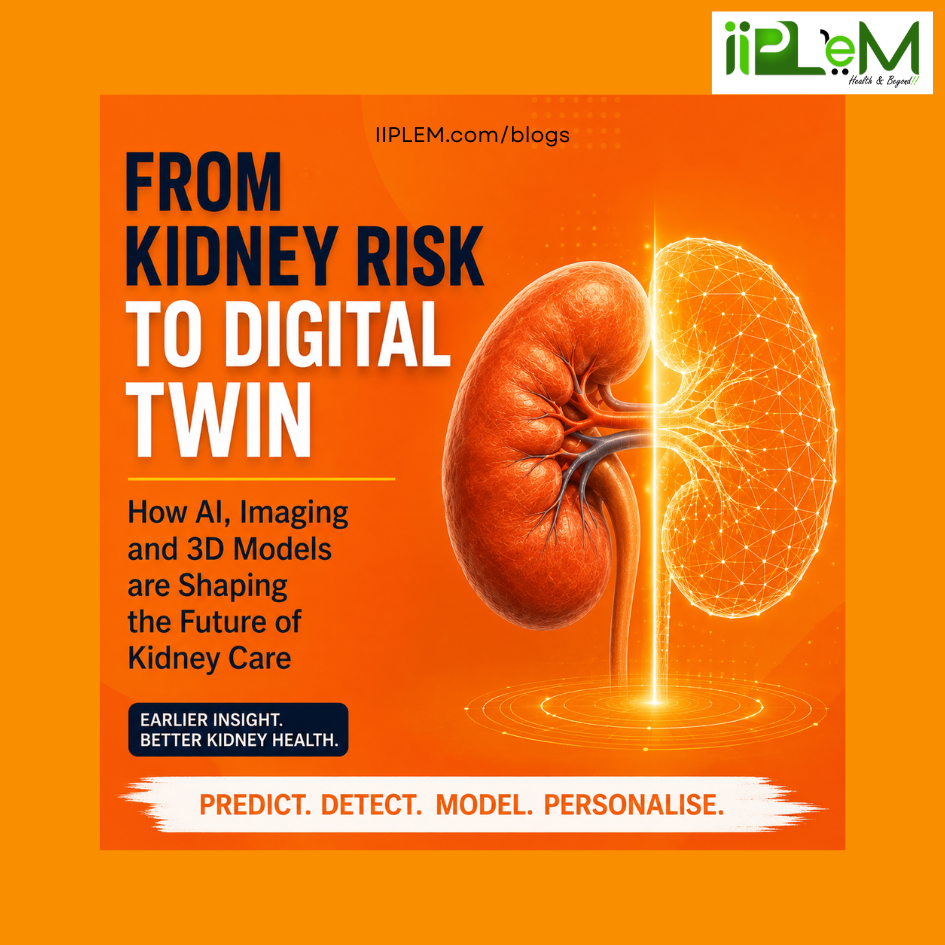
AI and Kidney Disease: From CKD Risk Prediction to the Kidney Digital Twin
How IIT Madras and CMC Vellore are combining artificial intelligence, CT imaging and 3D reconstruction to explore a new future for precision kidney care
Kidney disease can progress silently.
A person may have significant kidney damage before experiencing obvious symptoms.
This makes early detection, risk assessment and continuous monitoring critically important—particularly in people living with diabetes, hypertension and other cardiovascular–metabolic risk factors.
Now, researchers from IIT Madras and Christian Medical College (CMC), Vellore are developing a set of artificial-intelligence-based technologies that could change how kidney disease is assessed.
The work brings together three complementary capabilities:
• AI-based CKD risk prediction
• Deep-learning analysis of kidney CT images
• 3D reconstruction and quantification of kidney anatomy
Individually, each technology addresses a different part of kidney assessment.
Together, they point towards a much bigger possibility:
A patient-specific Kidney Digital Twin.
The concept is still at the research and development stage and requires broader clinical validation. But it offers an intriguing glimpse into how AI, medical imaging and longitudinal health data could eventually contribute to precision nephrology.
Why Early Detection of Chronic Kidney Disease Matters
Chronic kidney disease (CKD) is often described as a silent condition because early kidney damage may not produce noticeable symptoms.
Kidney health is therefore assessed using measurable indicators such as estimated glomerular filtration rate (eGFR) and urine albumin-to-creatinine ratio (UACR).
Diabetes and hypertension are particularly important because they are major causes of CKD and frequently coexist with cardiovascular and metabolic disease.
This creates a fundamental clinical challenge:
How can we identify people at risk earlier—before progressive kidney damage becomes difficult to reverse?
That is where artificial intelligence may eventually become useful.
- AI for Chronic Kidney Disease Risk Prediction
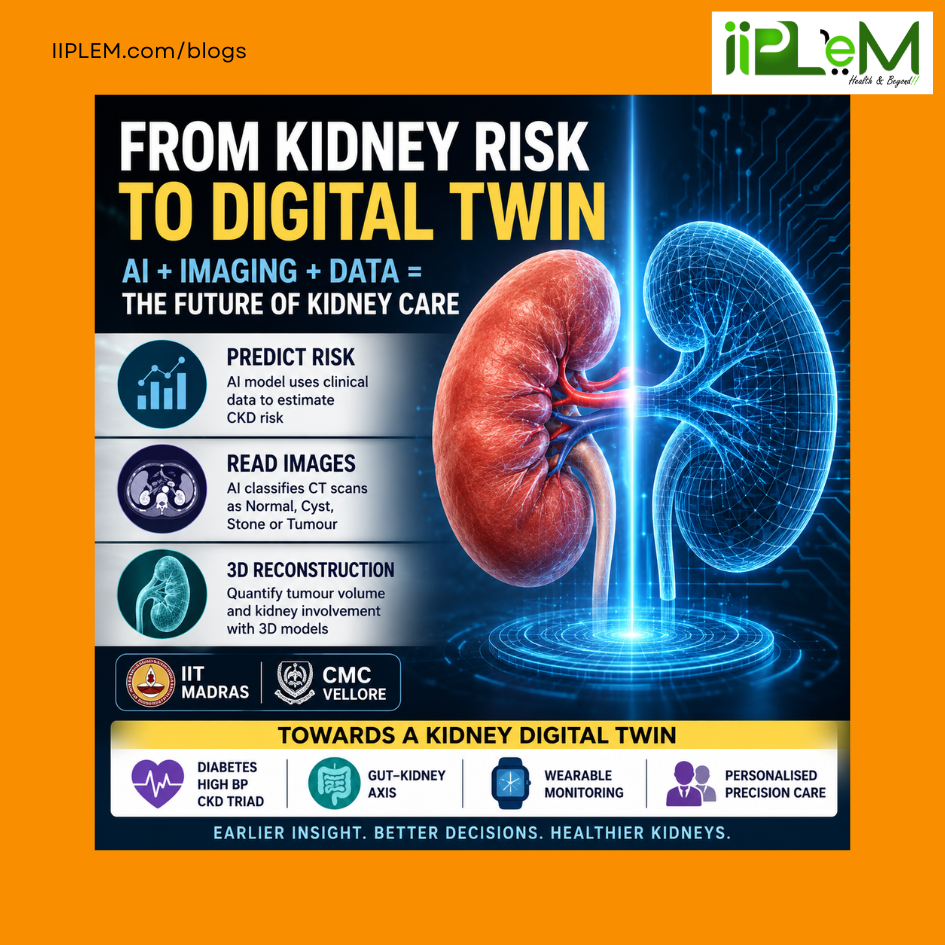
The first technology developed by the IIT Madras–CMC Vellore collaboration is a machine-learning model designed to estimate CKD risk using clinical and laboratory information.
Instead of looking only for established kidney disease, the approach attempts to identify patterns associated with increased risk.
The conceptual shift is important:
From detecting disease → towards identifying risk earlier.
The researchers have developed a user-friendly prototype and are working towards improving the model's accuracy and making its outputs easier for clinicians to interpret.
This is particularly relevant because kidney disease rarely exists in isolation.
Clinical variables related to:
- blood glucose
- blood pressure
- metabolic health
- renal function
- other routine laboratory measurements
can collectively provide information about a person's kidney-risk profile.
The eventual value of such a model, however, will depend on validation across larger and more diverse patient populations.
Diabetes, Hypertension and CKD: A Connected Biological System
Diabetes, high blood pressure and CKD are often discussed separately.
Biologically, they are closely connected.
Diabetes can damage the kidney
Persistently elevated blood glucose can damage renal blood vessels and the structures involved in filtration.
Hypertension can damage the kidney
Chronically elevated blood pressure places additional stress on renal blood vessels and the glomerular filtration system.
Kidney dysfunction can worsen blood pressure
As kidney function declines, abnormalities in sodium and fluid handling and neurohormonal regulation can contribute to hypertension.
This creates a potentially self-reinforcing cycle:
Diabetes / metabolic dysfunction
↓
Kidney injury
↓
Declining kidney function
↓
Blood-pressure and metabolic disturbances
↓
Further cardiovascular and kidney risk
Modern medicine increasingly recognises these interactions through the cardiovascular–kidney–metabolic (CKM) framework.
That makes AI-based risk prediction particularly interesting.
The same clinical information used to understand metabolic and cardiovascular risk may also contain signals relevant to kidney health.
- Deep Learning for Kidney CT Image Classification
The second technology moves from clinical data to medical imaging.
The researchers developed a deep-learning approach for classifying kidney CT images into four categories:
Normal | Cyst | Stone | Tumour
The work used a dataset of approximately 12,400 kidney CT images and investigated multiclass classification using a deep-learning architecture. The research was presented as an e-poster at the International Society of Nephrology World Congress of Nephrology 2025.
The system is intended to transform complex imaging information into structured classification that could potentially support clinical assessment.
But an important scientific distinction must be maintained:
A research AI classifier is not the same as a clinically validated diagnostic system.
The model still needs appropriate validation across independent datasets, institutions, imaging protocols and patient populations before its performance can be assumed to generalise to routine clinical practice.
That distinction matters.
Good medical AI is not simply about achieving a high accuracy number on one dataset.
It is about demonstrating robustness, reproducibility, generalisability and clinical usefulness.
- From CT Images to a 3D Kidney
The third technology takes the idea one step further.
Instead of treating a CT scan simply as a series of images, the researchers have developed an open-source-based 3D anatomical imaging platform capable of reconstructing patient-specific kidney models.
The platform can quantify characteristics such as:
- tumour volume
- percentage of kidney involvement
- patient-specific anatomical information
This changes the nature of the information being generated.
Instead of simply asking:
“What does the scan show?”
we can begin asking:
“What can we measure from the scan?”
And once something can be measured digitally, it becomes possible to track how it changes over time.
That is one of the foundations of the Digital Twin concept.
Three Technologies, One Bigger Vision
The three technologies can be viewed as different layers of the same system.
Technology | Potential contribution |
CKD risk prediction | Identifies patterns associated with kidney disease risk |
CT image classification | Categorises structural kidney abnormalities |
3D kidney reconstruction | Quantifies patient-specific anatomy and tumour involvement |
Kidney Digital Twin | Could eventually integrate these data longitudinally |
The research team is led by Prof. G.L. Samuel and research scholar Jennifer Delighta from IIT Madras, in collaboration with Prof. Santosh Varughese of CMC Vellore.
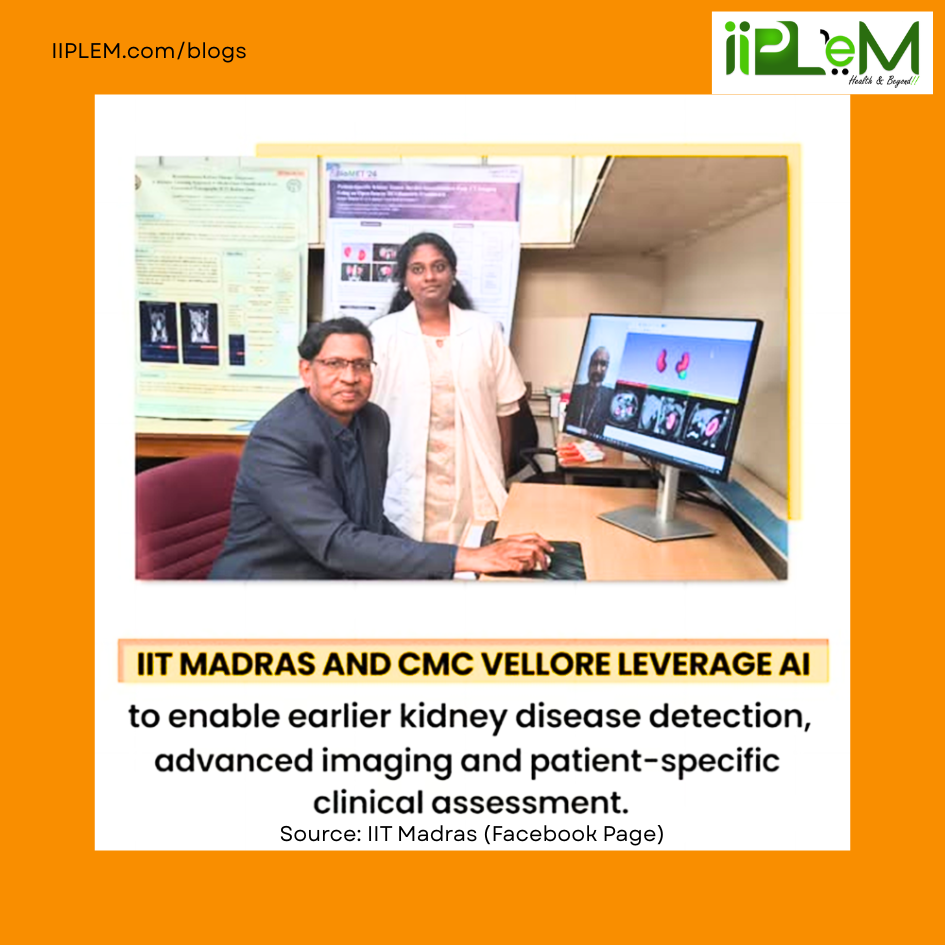
IIT Madras records Jennifer Delighta's doctoral work in Biomedical Devices and Technology with Prof. Santosh Varghese/Varughese as co-guide.
The project is supported by IIT Madras and the SPARC programme.
What Is a Kidney Digital Twin?
A Digital Twin is a digital representation of a physical system that can incorporate measurements, models and data over time.
The concept is well established in engineering.
Applying it to medicine is much more challenging because human biology is dynamic, adaptive and highly individual.
A future Kidney Digital Twin could potentially combine:
Clinical history
↓
Diabetes and blood-pressure history
↓
Kidney biomarkers
↓
eGFR and UACR trends
↓
Medical imaging
↓
3D kidney anatomy
↓
Disease measurements
↓
Longitudinal changes
↓
Predictive models
The result would not simply be a digital picture of a kidney.
It could eventually become a patient-specific computational representation of kidney health and disease progression.
Why a Digital Twin Could Be Different from a Medical Scan
A conventional scan is essentially a snapshot.
A Digital Twin is potentially a trajectory.
Consider the difference.
A scan asks:
What does the kidney look like today?
A longitudinal digital model could potentially ask:
How has the kidney changed?
And eventually:
How might it change next?
That distinction could become important in chronic disease, where the rate and direction of change may be as clinically important as a single measurement.
The vision therefore moves through several stages:
Detect
→ Quantify
→ Monitor
→ Model
→ Predict
→ Personalise
The last stages remain a future research ambition rather than established clinical practice.
The Gut–Kidney Axis: Another Layer of the Biology
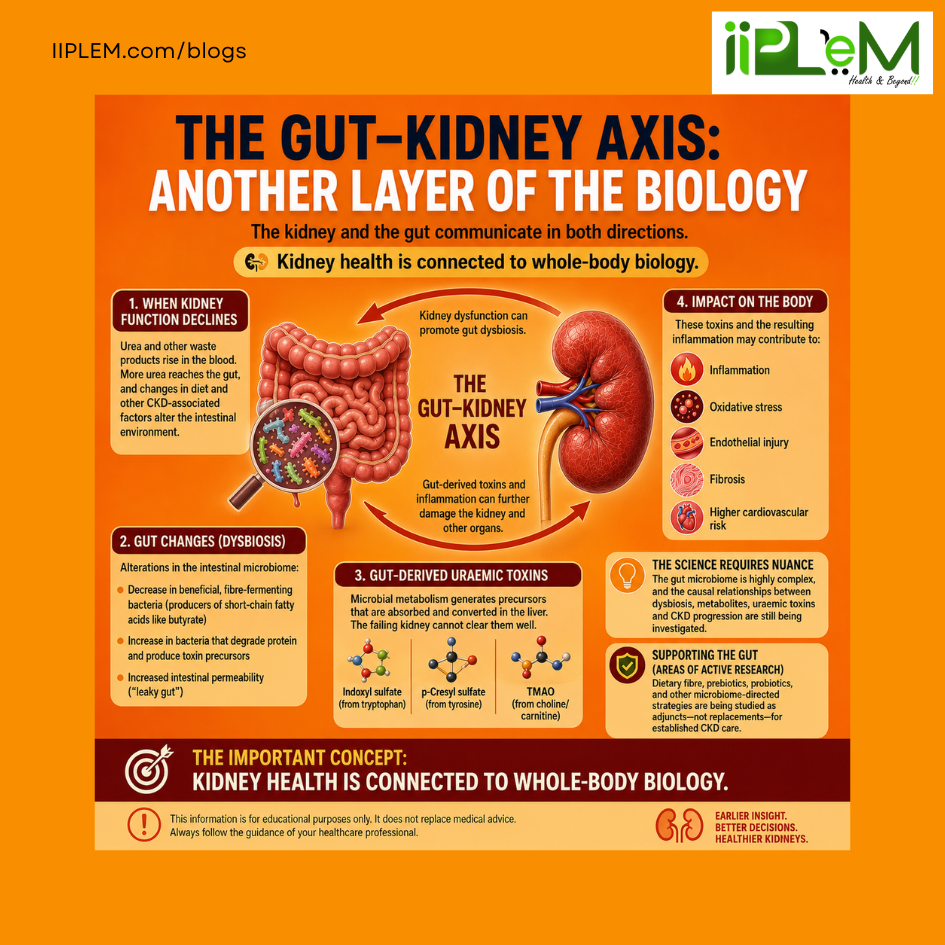
There is another reason kidney disease should not be viewed as an isolated organ problem.
The kidney interacts extensively with the gastrointestinal tract and its microbial ecosystem.
This is commonly referred to as the gut–kidney axis.
As kidney function declines, the internal biochemical environment changes. Increased urea availability in the gut, alterations in diet and other CKD-associated factors can contribute to changes in the intestinal microbial ecosystem.
Research has linked CKD-associated dysbiosis with altered microbial metabolism and the generation or accumulation of gut-derived uraemic toxins, including compounds such as indoxyl sulfate and p-cresyl sulfate.
These pathways are being investigated because they may contribute to inflammation, oxidative stress and cardiovascular and renal complications.
But the science requires nuance.
The gut microbiome is highly complex, and the causal relationships between dysbiosis, metabolites, uraemic toxins and CKD progression are still being investigated.
Similarly, dietary fibre, prebiotics, probiotics and other microbiome-directed strategies are areas of active research. They should not be presented as replacements for established CKD treatment.
The important concept is this:
Kidney health is connected to whole-body biology.
What Could a Future Kidney Digital Twin Integrate?
The real power of a Digital Twin may come not from any single data source, but from combining multiple biological layers.
- Metabolic data
- Blood glucose
- HbA1c
- Body composition
- Lipid profile
- Metabolic risk factors
- Cardiovascular data
- Blood pressure
- Cardiovascular risk
- Vascular health
- Relevant clinical history
- Kidney biomarkers
- Serum creatinine
- eGFR
- UACR
- Electrolytes
- Longitudinal laboratory trends
- Imaging
- CT
- MRI where appropriate
- Kidney morphology
- Cysts
- Stones
- Tumours
- Other structural characteristics
- 3D anatomical information
- Kidney volume
- Tumour volume
- Percentage of kidney involvement
- Spatial relationships between structures
- Future biological signals
Research may eventually explore additional information such as:
- microbiome profiles
- metabolomics
- inflammatory biomarkers
- gut-derived metabolites
- wearable-derived physiological measurements
The challenge will be deciding which signals genuinely improve clinical prediction and decision-making.
More data are not automatically better data.
Could Wearables Become Part of Kidney Monitoring?
The IIT Madras–CMC Vellore team has indicated plans to explore integrating these technologies with wearable sensing platforms for long-term monitoring and to expand clinical validation using multi-centre datasets.
This is potentially significant.
Wearable technologies can generate longitudinal physiological information rather than relying entirely on occasional clinic visits.
In a future system, such data might complement:
- Wearables
- Blood tests
- Clinical history
- Medical imaging
- AI models
- 3D anatomical data
A continuously updated digital representation could theoretically emerge.
But the critical scientific question remains:
Does continuous data actually improve clinical outcomes?
That question must be answered through evidence, not technological enthusiasm.
From Snapshot Medicine to Trajectory Medicine
Much of healthcare remains episodic.
A patient visits a clinic.
Tests are performed.
An image is obtained.
A report is generated.
Treatment is adjusted.
Then the patient returns later.
But chronic disease continues to evolve between those appointments.
Blood pressure changes.
Glucose changes.
Kidney function changes.
Tumour characteristics can change.
Metabolism changes.
A future Digital Twin could provide a framework for representing those changes longitudinally.
This could shift the healthcare question from:
“What is happening now?”
to:
“How is the patient's biology changing?”
and eventually:
“What might happen next?”
That is the conceptual promise of predictive, personalised medicine.
The Biggest Challenge Is Not Building the AI
It is validating the AI.
Research prototypes can be promising.
Clinical technologies need to be proven.
Before systems such as these can become routine clinical tools, researchers will need to establish performance across:
- larger datasets
- multiple hospitals
- different patient populations
- different CT scanners and acquisition protocols
- different disease presentations
- real-world clinical workflows
They will also need to establish whether AI outputs are understandable and useful to clinicians.
Most importantly:
Does the technology improve patient care?
Accuracy alone is not enough.
A clinically useful system must ultimately demonstrate meaningful benefit.
The current IIT Madras–CMC work should therefore be understood as a research and prototype-stage step towards this future, rather than as a clinically validated Kidney Digital Twin already ready for routine healthcare.
Why the IIT Madras–CMC Collaboration Is Important
One of the most interesting aspects of this work is its interdisciplinary character.
It brings together:
- Mechanical engineering
- Artificial intelligence
- Medical imaging
- 3D reconstruction
- Nephrology
- Clinical medicine
This convergence is increasingly important in healthcare innovation.
Some of the most difficult medical problems cannot be solved by medicine or engineering alone.
They require both.
IIT Madras has an established research ecosystem around Digital Twin technologies, while its collaboration with CMC Vellore brings clinical and nephrology expertise into the problem.
What This Could Mean for Precision Kidney Medicine
If these technologies mature successfully, the future system could potentially look like this:
Patient
↓
Clinical & metabolic data
↓
AI-based kidney-risk assessment
↓
Laboratory monitoring
↓
Medical imaging
↓
AI image analysis
↓
3D kidney reconstruction
↓
Digital Twin
↓
Longitudinal monitoring
↓
Predictive modelling
↓
Clinician-guided personalised care
The important point is that the Digital Twin would not replace the doctor.
It would ideally provide the clinician with a richer, more integrated representation of the patient.
The Future May Not Be Doctor vs AI
The more useful question may be:
How can doctors use AI to understand their patients better?
The most promising healthcare model may therefore not be:
Doctor vs AI
but:
Doctor + AI + Digital Twin + continuous patient data
AI can process enormous quantities of information.
Imaging can reveal anatomy.
Laboratory testing can reveal physiology.
Wearables can provide longitudinal signals.
The clinician provides context, judgement, experience and responsibility.
Together, these elements could potentially enable a more personalised approach to chronic disease management.
From Kidney Risk to Kidney Digital Twin
The significance of the IIT Madras–CMC Vellore research may therefore extend beyond three individual AI tools.
The first system asks:
Who may be at risk?
The second asks:
What structural abnormality may be present?
The third asks:
How much disease is present and where is it located?
The Digital Twin vision asks a much bigger question:
How is this individual's kidney changing—and what might happen next?
That represents a conceptual movement:
Risk → Detection → Quantification → Monitoring → Prediction → Personalisation
The Kidney Digital Twin is still a developing research vision.
But the building blocks are beginning to emerge.
And if these technologies can ultimately be validated, integrated and demonstrated to improve clinical outcomes, they could contribute to a broader transformation in precision medicine.
The future medical scan may not simply be an image.
It may become one component of a continuously evolving digital model of the patient.
Perhaps the most important question, therefore, is no longer:
“What is happening to the kidney today?”
but:
“What is the kidney's trajectory—and can we intervene earlier to change it?”
That may be where the next chapter of precision kidney care begins.
-------------------
Frequently Asked Questions
What is a Kidney Digital Twin?
A Kidney Digital Twin is a developing concept involving a patient-specific digital representation of kidney structure, function and potentially disease trajectory. It could eventually integrate clinical, laboratory, imaging and longitudinal data.
Can AI diagnose kidney disease today?
AI systems are increasingly being researched for kidney disease detection, risk prediction and image analysis. However, individual research models require appropriate external and clinical validation before they can be considered routine diagnostic tools.
What are the three IIT Madras–CMC kidney technologies?
The collaboration involves an AI-based CKD risk prediction model, a deep-learning CT image classifier for normal kidney, cyst, stone and tumour categories, and an open-source-based 3D kidney imaging platform for anatomical and tumour-volume assessment.
What is the gut–kidney axis?
The gut–kidney axis describes the bidirectional relationship between kidney function and the gastrointestinal tract, including interactions involving microbial metabolism, intestinal conditions and circulating metabolites.
Are microbiome or dietary interventions a treatment for CKD?
Not as a replacement for established medical care. Dietary and microbiome-directed approaches are active areas of research and should be considered within appropriate clinical guidance.
Is the IIT Madras–CMC Kidney Digital Twin already available for patients?
No. The current technologies are research/prototype-stage developments. The team has indicated plans for broader clinical validation and exploration of wearable integration.
Important Medical Disclaimer
This article discusses emerging research in artificial intelligence, medical imaging and kidney Digital Twin technologies. These technologies are still undergoing research and validation and should not be interpreted as established diagnostic or treatment tools.
-----
Below peer-reviewed comment by Dr. Amitav Banerjee. He is a distinguished clinical epidemiologist holding MBBS and MD degrees, leveraging 45+ years of combined experience across 27 years as an Indian Armed Forces medical officer and two decades as an Emeritus Professor at Dr. D.Y. Patil Medical College to lead the Universal Health Organisation in advocating for transparent, ethical, and evidence-based global public health.
"Nothing in this article replaces medical consultation, kidney-function testing, imaging interpretation or treatment prescribed by a qualified healthcare professional. The article is directionally sound and unusually cautious for a popular-facing AI/health article, but it substantially compresses several distinct technologies into the label “Kidney Digital Twin.” The underlying IIT Madras–CMC work appears promising, yet the evidence currently supports “research components that could contribute to a future digital twin” much more strongly than it supports the existence of a clinically meaningful kidney digital twin."
#ArtificialIntelligence #HealthcareAI #KidneyDisease #CKD #DigitalTwin #MedicalImaging #DeepLearning #3DImaging #Nephrology #HealthTech #IITMadras #CMCVellore #PrecisionMedicine #PersonalisedMedicine #MedTech
About the Author
Ft. Arnab Guha — Food Scientist, Inventor & Founder, Impeccable Innovations Pvt. Ltd.
Arnab Guha is a food scientist and innovation entrepreneur with 20+ years of experience spanning food, agriculture and biotechnology, including corporate R&D and manufacturing. He writes on nutrition, gut health, food science, emerging health technologies and science-led innovation. With a M.Sc. degree in Food Science & Technology from CCS HAU-Hisar (2006), plus a B.A.Sc. Food Technology degree from BCAS Delhi University (2004) and inventorship on 6 patents, Arnab founded Impeccable Innovations Pvt Ltd (IIPL) in 2016 to build science-backed, gut-friendly innovative healthy & non-inflammatory food company. In his entrepreneurship journey, he has also founded an ethical health-first marketplace (IIPLeM.com) & co-founded NGO named - 2nd Brain Foundation).
SUBSCRIBE TO OUR YOUTUBE CHANNEL FOR LATEST VIDEOS ON GUT-NUTRITION & HEALTH RELATED CONTENTS